

Runnersworld & INTERSPORT
Part of EK Netherlands. Nine stores, starting with Hoorn and Eindhoven — including the launch of The Loop circular concept store.
Retail partnerRunnersworld piloted Utilitarian across five stores from August to December 2025. In January 2026, Runnersworld committed to twelve months of ongoing use. The programme now runs in nine stores. Totals exceed 1,000 customers and 1,500 scans with product-level data.
Part of EK Netherlands. Nine stores, starting with Hoorn and Eindhoven — including the launch of The Loop circular concept store.
Retail partner
Recycling partner since 2016. 100,000+ pairs processed with Runnersworld. Handles collection, sorting and material recovery.
Recycling partner
Consumer-facing take-back app, product-level data capture, CRM integration and recycler tracking. Poster + QR code — no IT integration.
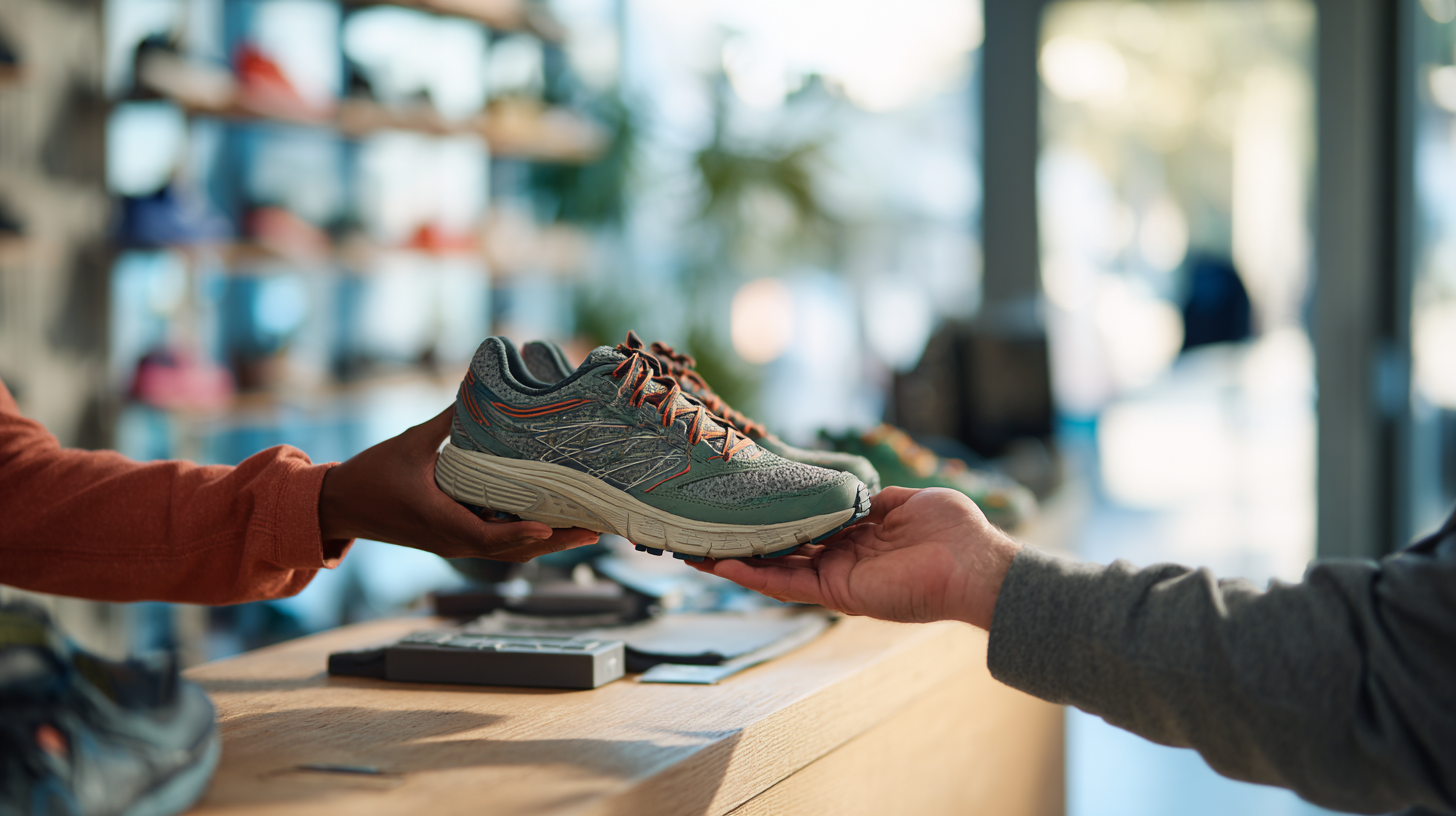
PlatformRunnersworld has collected shoes with FastFeetGrinded since 2016 — an estimated 100,000+ pairs. Customers brought in old shoes, store teams boxed them, FastFeetGrinded collected them. A weight report came back. The interaction ended there.
Returns were anonymous. No way to follow up, re-engage or measure behaviour.
No brand, model or category breakdown. Just total weight collected.
The programme cost money to run and generated no marketing or CRM value.
No reporting beyond a weight figure. No way to measure impact at store level.
We added a data layer to the moment that was already happening. The customer still hands in their shoes. The box still goes to FastFeetGrinded. What changed is what happens in between.
Hoorn and Eindhoven first, additional stores rolling out over the following weeks.
No hardware, no app installation, no IT integration.
Customer self-serves via their phone. Store teams continue as normal.
Platform runs standalone. Dashboard + export. CRM connection available but not required.
The pilot resulted in a committed partnership for 2026, with expansion across additional stores and product categories.
The same platform that runs at a permanent retail counter works in a tent at a finish line. We proved it in April.
ASICS EMEA hosted the activation at their expo stand at the marathon village. Runners brought worn racing shoes — of any brand and any condition — photographed the shoe, registered the model and condition, and left an email for a follow-up.
The activation proved a capability the permanent in-store deployments do not. A platform that runs on a customer's mobile phone, with product recognition handled on the back end, does not need fixed hardware.
Event-context take-back is a different commercial conversation. The lead arrives at peak product affinity, the venue context is unambiguous, and the activation window is bounded. Brand partners interested in event deployments can get in touch.
Email subscribers at €1–3 each with brand and category data attached. A new owned channel with purchase-intent signal built in. Repeat visit behaviour driven by incentive redemption.
Product-level take-back data structured for CSRD and EPR reporting. Auditable traceability from consumer interaction through to circular outcome.
Zero additional burden on store teams. No staff training, no new devices, no IT integration. Runs on a poster and a QR code. Customers self-serve.
Product-level visibility into what's being collected — not just weight. A richer service offering for retail clients as the programme scales.
The steps were self-explanatory. Customers responded positively. They are very curious about what actually happens to the shoes.
We even see customers coming back specifically to hand in their shoes and collect their reward — which shows the system is working very well in terms of building loyalty and repeat visits.
What makes this data valuable is not just transparency, but control. For the first time, we can link consumer returns at retail directly to operational circular outcomes.
The combination of simplicity, customer engagement and data-driven transparency is what makes this approach stand out. This is exactly the direction our industry needs.
The pilot proved the model works at store level. For 2026 the partnership continues — rolling out to additional Runnersworld and INTERSPORT stores. The infrastructure is poster-based and QR-driven, so expanding means printing more posters, not deploying more technology.
Beyond running shoes, the platform supports additional product categories including textiles and electronics. The EU Battery Regulation is also creating take-back requirements that apply across multiple retail divisions.
No forms. No sales funnel. A twenty-minute conversation with the co-founder who led this pilot from day one.
Tim Lee · co-founder, Utilitarian · led this pilot from day one.